
AI Agents Architecture

From Strategic Blueprint to Production Architecture

We meet you wherever you are in your AI journey. Whether you have a specific technical requirement or a complex business friction point with no clear starting line, we provide the bridge from uncertainty to high-performance systems.

Phase 1: Architectural Consulting & Discovery

For organizations that know they need AI but lack the technical roadmap, we provide strategic intervention:

  • Workflow Deconstruction: We analyze your existing business logic to identify where autonomous agents can provide the highest ROI.

  • Feasibility & Risk Assessment: We determine if the current state of technology (and your data) can support the complexity you require.

  • System Design: We define the agent orchestration, memory management, and tool-integration requirements before a single line of code is written.

Phase 2: Complex Agent Engineering

Once the blueprint is validated, we move into deep development. We do not build wrappers. We develop:

  • Reasoning Engines: Custom logic layers that allow agents to solve multi-step problems without hallucination.

  • Integrated Tooling: Agents that aren’t just “chatting” but are actively interacting with your internal databases, CRMs, and legacy software.

  • State Management: Robust architectures that allow AI systems to maintain context and continuity across long-running business processes.

Complex AI Agents Services

Assessment

• Business analysis • Feasibility assessment • Strategy and Roadmap design • Technical analysis and advisory

Data Analysis

• Business Data Mapping • External Data Identification • Data Annotation • Data Cleansing • Data Enrichment

Architecture

• Business workflow mapping • Agent Layers Architecture • Prototyping/ Proof of Concept (PoC) • Industrial level development • AI & Software Integration and Development

Deployment Services

• Integration with existing systems • Deployment (Edge & Cloud) • Monitoring, Maintenance & Support
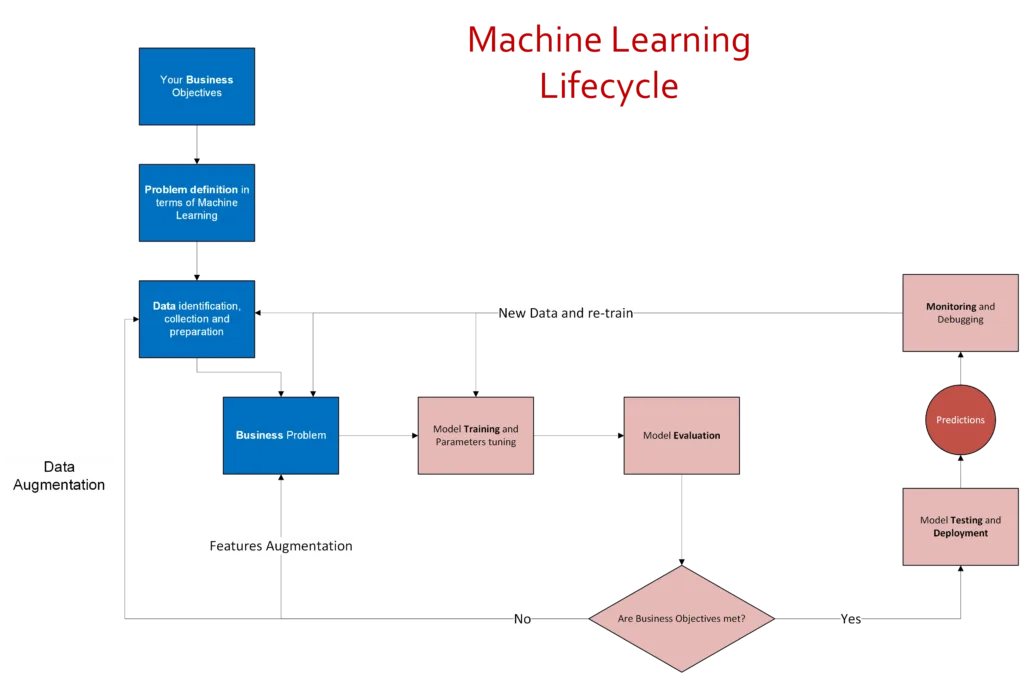
Service Description

We identify with the customer areas of improved productivity opportunities by the means of using AI Agents and Machine Learning.

GoWit-Hungary will take its customer on the AI journey, from problem classification to deployment and maintenance.

How it works

Why Us?

Stack

Pricing

AI Software Services

Our latest Publications

November 26, 2025

Sylvain LIEGE has launched his new Book

We are please to share that Sylvain LIEGE has launched his new book: AI: The Hunt for Intelligence – Beyond the Hype and Fear
AI Data Quality
June 25, 2025

#12 AI Data Quality: Crap in – Crap out

AI Data Quality – Any AI project is based on data used to train the model. Unlike what we would imagine, getting the right data in the right shape is far from easy or obvious. Building a quality dataset is an engineering work. This paper covers the various steps of this job.
AI: Fixing the Training gone Wrong
May 20, 2025

#11 AI: Fixing the Training gone Wrong

Building on Paper #10’s AI training pitfalls—underfitting (too lazy), overfitting (too rigid), high bias (skewed guesses), and high variance (wild swings)—this paper offers practical fixes for our smell detector. We explore three levers: boosting network capacity, extending training with more epochs, and enriching data for smarter learning.

Our latest Publications

November 26, 2025

Sylvain LIEGE has launched his new Book

We are please to share that Sylvain LIEGE has launched his new book: AI: The Hunt for Intelligence – Beyond the Hype and Fear
AI Data Quality
June 25, 2025

#12 AI Data Quality: Crap in – Crap out

AI Data Quality – Any AI project is based on data used to train the model. Unlike what we would imagine, getting the right data in the right shape is far from easy or obvious. Building a quality dataset is an engineering work. This paper covers the various steps of this job.
AI: Fixing the Training gone Wrong
May 20, 2025

#11 AI: Fixing the Training gone Wrong

Building on Paper #10’s AI training pitfalls—underfitting (too lazy), overfitting (too rigid), high bias (skewed guesses), and high variance (wild swings)—this paper offers practical fixes for our smell detector. We explore three levers: boosting network capacity, extending training with more epochs, and enriching data for smarter learning.

Contact us

This website stores cookies on your computer. These cookies are used to provide a more personalized experience and to track your whereabouts around our website in compliance with the European General Data Protection Regulation. If you decide to to opt-out of any future tracking, a cookie will be setup in your browser to remember this choice for one year.

Accept or Deny